Executive Briefing: Vacuum Packaging Dynamics in Hamburg & The Metropolitan Region
Analysis of Maritime Supply Chain Requirements, Cold-Chain Logistics Demands, and Structural Regulatory Transitions across Northern Germany.
The Hamburg Port Advantage: Supply Chain Integrity in Maritime Logistics
As Northern Europe’s primary logistics engine and the third-largest container port on the continent, the Port of Hamburg (Hafen Hamburg) processes tens of millions of metric tons of cargo annually. Serving as the strategic gateway to the Nordic nations, Baltic states, and Central-Eastern Europe, Hamburg's import/export ecosystem requires flexible, high-durability, and ultra-high-barrier packaging solutions. Industrial vacuum packaging serves as a critical defense layer against atmospheric degradation, oxidative rancidity, salt-fog corrosion, and microbial contamination during international maritime transit and extended warehousing in facilities around Altenwerder, Steinwerder, and Wilhelmsburg.
For buyers, procurement directors, and supply chain managers in the Hamburg metropolitan area, sourcing high-performance flexible packaging is no longer merely a purchasing decision—it is a risk mitigation strategy. Modern supply chains exposed to fluctuating sea temperatures, humidity variations in the Elbe estuary, and rigorous European Food Safety Authority (EFSA) inspections demand multi-layer co-extruded films engineered to specific Oxygen Transmission Rates (OTR) and Water Vapor Transmission Rates (WVTR).
Export-Grade Vacuum Pack Solutions for the Hamburg Market
Engineered specifically for Northern European food processors, industrial marine exporters, and commercial retail distributors.
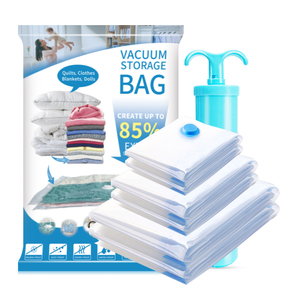
Travel Vacuum Compression Storage Bags Cube Vacuum Bag Packaging Space Saver Storage Bags
- High-density PA/PE composite structure
- Airtight triple-seal turbo valve system
- Up to 80% volume reduction efficiency
- Ideal for textile and bulk freight logistics
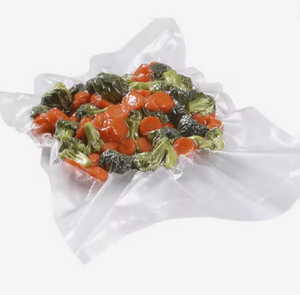
17*25 CM Embossed Vacuum Pack Bags 7-Layer Co-extruded PA/PE Anti-puncture Bags
- 7-Layer co-extruded barrier construction
- Micro-channel textured backing for fast air extraction
- High tensile strength & superior puncture resistance
- Sous-vide capable and freeze-resistant (-40°C)
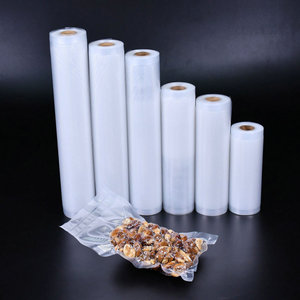
Meat Vegetable Corn Pack Embossed Vacuum Bag Pouches Fresh Keeping Bag
- Food-contact compliant (EU 10/2011 & FDA)
- Preserves organoleptic food properties
- Prevents freezer burn and moisture migration
- Crystal clear transparency for retail appeal

Custom Vacuum Food Packaging Seal Bags Storage Bag Clear Compressed Air Food Grade
- Fully customizable sizes, thicknesses, & prints
- BPA-free and plasticizer-free formulation
- Heavy-duty perimeter heat seals
- Optimized for commercial impulse vacuum sealing
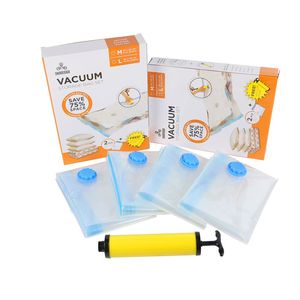
Wholesale Packaging Cloth Air Bag Inflatable Airtight Compression Storage Set
- Durable inflatable air cushion & storage hybrid
- Impact-absorption properties for delicate goods
- Multi-layer barrier preventing seal decay
- Reusable design for sustainable supply chains
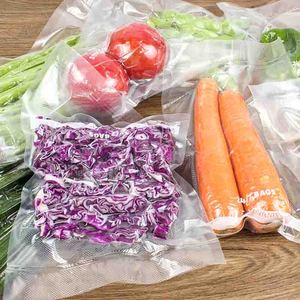
Custom Printed Vacuum Pack Rolls Vacuum Seal Packaging Pouches for Sealing Bags
- Up to 10-color high-definition rotogravure printing
- Custom roll widths for automatic form-fill-seal (FFS)
- Uniform web tension & heat resistance
- Brand-enhancing glossy or matte surface finishes
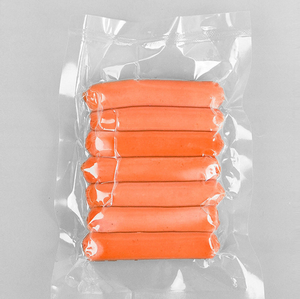
Aluminum Foil Vacuum Pack Clear High Oxygen Barrier Retort Pouch Plastic Bags
- Near-zero OTR and WVTR metallic barrier layer
- Retort sterilization ready (up to 121°C/250°F)
- Extended ambient shelf-life without refrigeration
- Ideal for ready-to-eat meals and pet food formulations
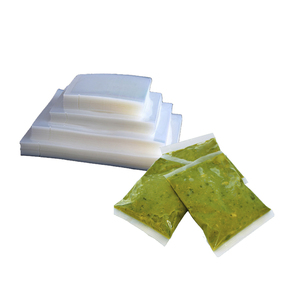
3 Side Sealed Plain Transparent Food Boiled Vacuum Pack Plastic Packaging Bags
- Classic 3-side seal construction for maximum volume
- Boil-proof and pasteurization compliant
- High clarity optical properties for product visibility
- Optimized for frozen fish, guacamole, and purees
Localized Industrial Application Scenarios in Northern Germany
Customized barrier solutions targeting key economic sectors in Hamburg, Bremen, and Schleswig-Holstein.
1. Maritime Seafood Processing (Altona & Cuxhaven)
Fresh fish landings along the Elbe river and North Sea coast require immediate oxygen suppression to prevent lipid oxidation and enzymatic spoilage. Our 7-layer PA/PE embossed vacuum pouches and 3-side seal transparent bags provide an impermeable barrier for herring, cod, and salmon fillets, keeping products fresh for both local distribution across Metro Hamburg and frozen exports to Eastern Europe.
2. Marine Hardware & Engine Corrosion Defense
Shipbuilding yards and maritime repair centers around Blohm+Voss require high-puncture-resistant aluminum foil vacuum packs to preserve precision steel components, hydraulics, and electronic spare parts against marine atmosphere oxidation, salt fog, and ambient condensation during multi-month container ship journeys.
3. Organic & Premium Meat Cold-Chain Distribution
Northern German meat processors supplying regional supermarkets like Edeka, Rewe, and Aldi Nord demand strict bone-guard protection and high-clarity barrier pouches. Our multi-layer co-extruded films resist sharp bone punctures while preventing purge accumulation, extending retail display life in refrigerated counters.
4. Retort Meal Packaging for Convenience Markets
The demand for ready-to-eat (RTE) meals, soups, and specialized sauces in urban centers like Hamburg-Mitte has driven adoption of high-temperature retort pouches. Capable of surviving thermal processing up to 121°C, our aluminum and transparent barrier pouches eliminate the need for cold-chain refrigeration during dry storage.
5. Commercial Textile Freight Optimization
Hamburg’s fashion and soft-goods logistics operators utilize heavy-duty inflatable and compression vacuum storage bags to optimize container loading densities. By compressing bulk textiles by up to 80%, freight forwarders achieve lower per-unit transport costs across international logistics corridors.
Macro Trends & Regulatory Environmental Mandates in Germany
Navigating the Packaging Act (VerpackG), EU Green Deal, and Circular Polymeric Material Requirements.
1. The Shift to Recyclable Monomaterial Film Structures
With the enforcement of Germany’s updated Verpackungsgesetz (VerpackG) and the Central Agency Packaging Register (ZSVR) guidelines, packaging buyers in Hamburg are under intense pressure to transition away from traditional non-recyclable multi-material laminates (such as unseparated PET/ALU/PE). The market is rapidly moving toward fully recyclable Mono-PE or Mono-PP co-extrusions engineered with EVOH thin-coatings. These high-barrier monomaterials meet strict European recyclability standards while retaining the essential gas barrier needed for shelf-life extension.
2. Solvent-Free Laminations & Clean Production Standards
Environmental and health safety mandates across the EU require strict limits on Volatile Organic Compounds (VOCs) and solvent residues in food packaging. Our manufacturing facilities utilize 100% solvent-free adhesive lamination and co-extrusion technology, ensuring that zero chemical migrant risks threaten food purity—fully complying with EC Regulation No. 1935/2004 and Regulation (EU) No. 10/2011 for food-contact materials.
3. Light-weighting without Sacrificing Puncture Resistance
To minimize eco-tax contributions based on packaging weight, German procurement managers are requesting thinner gauge films with superior mechanical properties. Through advanced 7-layer and 9-layer blown film extrusion technology, we replace traditional 120-micron films with high-tensile 90-micron structures that offer equivalent or superior puncture resistance and seal integrity.
| Film Type & Structure | Barrier Efficiency (OTR) | Puncture Strength | EU Recycling Compliance | Primary Hamburg Market Use |
|---|---|---|---|---|
| 7-Layer PA/PE Co-extruded | High (< 15 cc/m²/24h) | Superior (ASTM F1306) | Standard Polymeric Stream | Fresh Seafood, Meats, Frozen Goods |
| High-Barrier EVOH Mono-PE | Ultra-High (< 0.5 cc/m²/24h) | High Flex-Crack Resistance | 100% Recyclable (Class A) | Eco-Compliant Retail Packaging |
| Aluminum Foil Laminate (PET/ALU/CPP) | Near-Zero Barrier | Heavy-Duty Industrial Grade | Specialized Industrial Stream | Retort RTE Meals & Marine Spare Parts |
| Micro-Embossed PA/PE Channel Film | High Gas-Extraction Rate | Anti-Puncture Textured | Standard Polymeric Stream | Commercial & Domestic Vacuum Sealers |
Factory Strengths & OEM/ODM Manufacturing Capabilities
Why leading European distributors and Hamburg procurement managers partner with our production facilities.
Certified Food-Safety Standards
Our facilities operate under international food-safety and quality management systems, certified to IFS Food, BRCGS (Grade A), HACCP, and ISO 9001:2015. Every production batch undergoes rigorous microbiological, heavy-metal, and migration testing.
5,000+ Custom Formulations
Supported by an experienced in-house R&D laboratory, we have engineered over 5,000 custom barrier formulations tailored to specific customer thermal ranges, mechanical stress requirements, gas permeability needs, and automated packaging machinery speeds.
In-House Quality Control & Testing
From raw resin intake to finished pallet dispatch, our QA team monitors Critical Control Points (CCPs) continuously. Tensile strength, burst pressure, seal seam strength, OTR, and WVTR are validated with calibrated laboratory equipment prior to batch clearance.
Streamlined Freight to Hamburg Port
We provide full export-clearance documentation, customs assistance, and optimized palletization for ocean freight straight to the Port of Hamburg. Our typical turnkey production cycle ranges from 30 to 45 days post-specification approval.
Frequently Asked Questions by Hamburg Procurement Managers
Direct technical answers addressing local regulatory, technical, and commercial purchasing questions.
Partner with a Trusted Global Vacuum Pack Exporter
Optimize your packaging supply chain, lower your material defect rates, and ensure full compliance with German regulatory standards. Contact our engineering team today for technical data sheets, free sample kits, or direct quotation.