Featured Commercial Salmon Kibble Solutions
Formulated for specialized retail, veterinary channels, and global private label brand owners. Fully compliant with AAFCO & FEDIAF nutritional profiles.
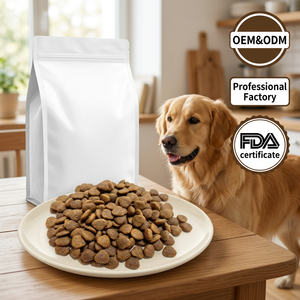
ARLIORCH Grain Free High Protein Dry Dog Food 30% Chicken Salmon Kibble Balanced Nutrition 10kg 20kg Bulk Wholesale ISO
- Protein Ratio: 30% Crude Protein
- Format: Grain-Free Dry Kibble
- Packaging: 10kg / 20kg Woven Bulk
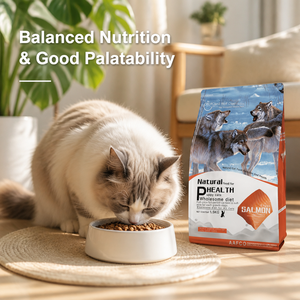
Cat Accessories Hot Sale 1.5KG Premium Salmon Deep Sea Fish Recipe Nutritious Wholesome Diet Dry Kibble Cat Food
- Key Ingredient: Deep Sea Salmon
- Added Taurine & Omega-3/6
- Packaging: 1.5KG Stand-up Doypack
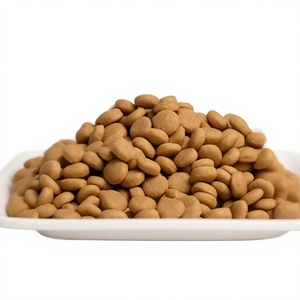
Balanced Dog Dry Food Salmon Flavor High Protein Kibble Omega Minerals Complete Daily Nutrition Small Breeds ODM/OEM Non-GMO
- Target: Small Breed Adult Dogs
- Formula: Non-GMO Salmon & Minerals
- Kibble Size: 6mm Micro-Triangle
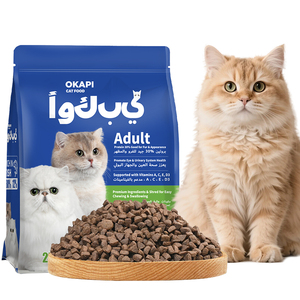
OEM Wholesale Kibble Grain Free Cat Food Chicken Premium Salmon Digestive Health Nutritional Dry Food All Stages
- Life Stage: All Life Stages (Feline)
- Benefit: Gut Microflora & Hairball Control
- Processing: Twin-Screw Extrusion
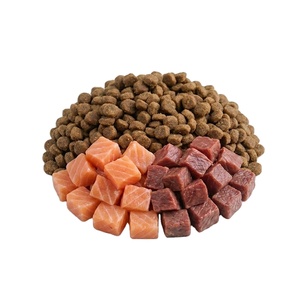
High Protein Grain Free Dog Dry Food Chicken Salmon Kibble Balanced Nutrition for Puppy Adult Senior Dogs
- Matrix: Chicken + Fresh Salmon Slurry
- Joint Support: Glucosamine & Chondroitin
- Custom Label: Full OEM Brandability
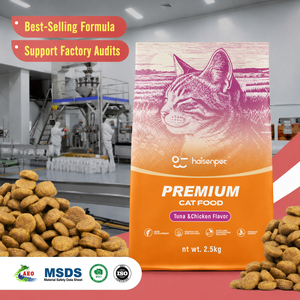
OEM Cat Kibble Fresh Meat Salmon Natural Adult Cat Food Various Flavors Added Taurine Private Label Factory Wholesale
- Technology: Direct Fresh Meat Injection
- Palatability: Cold Salmon Oil Coating
- Certifications: IFS, BRCGS, HACCP
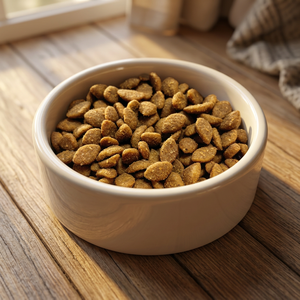
Salmon Chicken Flavor Dry Dog Food 26% Protein Complete Nutrition Kibble
- Crude Protein: 26% Standard Maintenance
- Economy Tier: High Cost-Efficiency
- Shelf Life: 18 Months Guaranteed
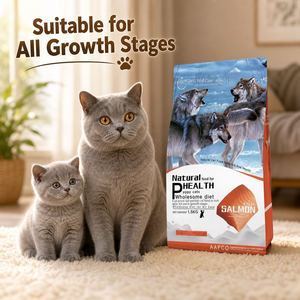
Productos Para Mascota 1.5KG Salmon Deep Sea Fish Recipe All Life Stages Complete Balanced Diet Dry Kibble Cat Food
- Market Focus: Latin America / Global Export
- Packaging: Multi-Language Printed Bag
- Urinary Tract Health: Controlled pH
China's Premier Salmon Kibble Manufacturing Infrastructure
As a leading China OEM/ODM salmon dry pet food factory operating at international auditing standards, our modern manufacturing complex combines state-of-the-art European twin-screw extrusion technology with rigorous raw material qualification. We cater directly to global brand owners, supermarket chains, and high-volume pet food distributors requiring customized, market-ready salmon kibble formulations.
Integrated In-House Formulation & Quality Control
Our operational capability spans the entire product development lifecycle—eliminating intermediary friction and reducing time-to-market. Over 250 dedicated nutrition specialists, veterinary food technologists, and analytical chemists operate our certified laboratory equipped with High-Performance Liquid Chromatography (HPLC) and Gas Chromatography-Mass Spectrometry (GC-MS).
- Raw Material Integrity Verification: Every batch of incoming Atlantic or Pacific salmon meal and raw frozen salmon blocks undergoes mandatory screening for Peroxide Value (PV), Anisidine Value (AV), Heavy Metals (Lead, Cadmium, Mercury, Arsenic), Histamines, and Mycotoxins before entering production lines.
- Precision Thermal Extrusion Control: Multi-zone thermal profiling ensures complete starch gelatinization (exceeding 92% digestibility) while capping maximum processing temperatures at 105°C to preserve heat-sensitive amino acids such as Taurine, Methionine, and Lysine.
- Vacuum Fat & Postbiotic Coating: Utilizing specialized vacuum coaters, pure cold-pressed salmon oil, active probiotics (Bacillus coagulans), and natural palatants are infused deep into the kibble matrix post-drying, protecting live microflora from thermal destruction.
Technical Comparison Matrix: Industrial Salmon Kibble Processing Tiers
| Technical Parameter | Standard Commercial Tier | Premium Private Label Tier | Ultra-Premium Veterinary Tier |
|---|---|---|---|
| Primary Marine Protein | Standard Marine Fish Meal (24-28%) | Single-Origin Salmon Meal (30-34%) | Fresh Salmon Slurry + Hydrolyzed Salmon Peptides (36-42%) |
| Extrusion Technology | Single-Screw Dry Extrusion | Twin-Screw Hydro-Thermal Extrusion | Low-Shear Vacuum Twin-Screw Extrusion |
| Omega-3 (EPA/DHA) Level | 0.3% - 0.5% | 0.8% - 1.2% | 1.5% - 2.2% (Active Skin & Coat Support) |
| Starch Digestibility Index | 82% - 85% | 88% - 92% | 95%+ Complete Micro-Gelatinization |
| Lipid Oxidation Shielding | Synthetic BHA/BHT Preservation | Mixed Tocopherols (Vitamin E) | Triple Shield: Tocopherols + Rosemary + Green Tea Extracts |
| Target Shelf Stability | 12 Months | 18 Months | 24 Months (Nitrogen-Flushed Barrier Film) |
Strategic Procurement Trends: Global Salmon Pet Food Market
Understanding shifting consumer demands and regulatory frameworks is vital for pet food brand managers, retail procurement executives, and strategic buyers. Based on proprietary factory buyer data and global market intelligence, we highlight four dominant trends defining salmon kibble sourcing through 2030.
1. Migration Toward Traceable ASC/MSC Certified Fresh Salmon Supply Chains
Pet owners increasingly demand complete transparency regarding marine ingredient origin. Sourcing uncertified, generic fish meal presents catastrophic brand risks in premium retail spaces. Forward-thinking private label brands are partnering with factories holding Aquaculture Stewardship Council (ASC) and Marine Stewardship Council (MSC) Chain of Custody certifications. Sourcing farmed Atlantic salmon from eco-certified aquaculture or wild-caught North Pacific salmon guarantees zero antibiotic contamination and sustainable fishing practices.
2. Rise of Single-Protein & Hydrolyzed Hypoallergenic Formulations
Feline and canine food sensitivities are driving high demand for mono-protein salmon diets. Commercial recipes blending poultry fat or mixed animal proteins with fish flavor no longer satisfy discerning European and North American retail channels. Manufacturing hypoallergenic salmon kibbles requires strict flushing protocols between production runs and enzymatic hydrolysis of raw salmon meat to reduce molecular weights below 10,000 Daltons—eliminating IgE-mediated allergic responses in sensitive pets.
3. Integration of Functional Postbiotics & Cold-Coated Skin Health Actives
The boundary between daily sustenance and functional veterinary nutrition is dissolving. Procurement specs for salmon kibble now frequently stipulate added functional complexes, including:
- Microencapsulated Probiotics & Heat-Stable Postbiotics: Enhancing mucosal immunity and stabilizing fecal consistency.
- Astaxanthin-Rich Microalgae & Salmon Oil Concentrates: Natural carotenoids that deepen coat pigmentation and provide potent antioxidant cellular defense.
- Organic Trace Minerals: Zinc and Copper methionine chelates that accelerate epidermal repair and improve paw pad resilience.
4. Mono-Material & Recyclable Packaging Compliance
Global regulatory mandates—such as the EU Packaging and Packaging Waste Regulation (PPWR)—are forcing brand owners to abandon traditional multi-layer aluminum foil laminates. Modern salmon kibble procurement must specify high-barrier recyclable mono-PE or mono-PP doypacks equipped with gas-flushing valves to maintain lipid freshness without compromising recyclability mandates.
Manufacturing Innovation & Supply Chain Optimization in China
China's pet food manufacturing sector has evolved from low-cost white-label assembly to world-class OEM/ODM research and production hubs. Institutional investments in automated extrusion technology, automated raw material micro-dosing, and digital batch tracking systems position top-tier Chinese factories as primary contract manufacturing partners for international brands.
Advanced Thermal Processing & Moisture Control Systems
Lipid degradation is the single primary cause of palatability loss and nutritional degradation in high-fat salmon kibbles. Our factory solves this through closed-loop automated thermal drying. Moisture levels are precisely monitored via continuous near-infrared (NIR) sensors, ensuring kibble core water activity (aw) is strictly maintained below 0.60. This prevents mold growth and lipid hydrolysis without needing chemical preservatives.
Seamless Export Phytosanitary & Regulatory Turnkey Support
Navigating cross-border customs requirements can delay product launches by months. As a registered GACC (General Administration of Customs of China) export enterprise with comprehensive EU, FDA, and Latin American market approvals, our export compliance department manages every aspect of global logistics documentation:
- Issuance of Official Veterinary Health Certificates and Sanitary Clearance.
- Free Sale Certificates (FSC) and Certificate of Origin (Form E, Form F, CO).
- Compliance verification with local labeling regulations (FEDIAF, AAFCO, GB/T 31216, GB/T 31217).
- Complete lot-level supply chain traceability from raw fish landing docks to final ocean container loading.
Frequently Asked Procurement Questions (B2B FAQ)
Everything procurement managers, private label brand founders, and importers need to know about contract manufacturing salmon kibble in China.
What are your Minimum Order Quantities (MOQs) for private label salmon kibble?
Our standard production MOQ starts at 3 Metric Tons (3,000 kg) per custom recipe run. For brands utilizing our existing standard, pre-tested formulas with custom printed packaging, MOQs can be tiered down to 1 Metric Ton. Bulk wholesale orders in 10kg/20kg neutral bags start at 5 Metric Tons.
What is the complete lead time from initial brief to shipment dispatch?
For custom formulation development, the typical timeline is 45 to 60 days. This includes: Recipe development & pilot trial (14-21 days), analytical testing & palatability trials (7-10 days), custom packaging plate making & bag printing (14-20 days), and full commercial batch production & export inspection clearance (7-10 days). Repeat orders are fulfilled within 14-21 days.
Can you manufacture according to our proprietary recipe, and how is IP protected?
Yes. We routinely manufacture under Non-Disclosure Agreements (NDAs) using customer-supplied proprietary recipes. Our technical team audits your formula for extrusion feasibility and target market compliance. Your intellectual property and recipe matrix remain strictly your exclusive asset.
What quality control certifications does your production facility hold?
Our state-of-the-art facility holds independent audits and certifications for IFS Food (International Featured Standards), BRCGS Global Standard for Food Safety (Grade AA), HACCP, ISO 22000, and ASC/MSC Chain of Custody for sustainable seafood handling. Full audit reports are available upon request for vendor qualification.
How do you ensure zero cross-contamination for grain-free or single-protein salmon lines?
We maintain dedicated, physically isolated processing lines and specialized cleaning-in-place (CIP) dry-flushing protocols between production runs. Rapid ELISA allergen test kits are used to verify zero cross-contamination of grains or secondary animal proteins prior to running batch production.
What customized packaging formats do you offer for pet food brand owners?
We supply a complete spectrum of packaging solutions: flat-bottom quad-seal bags, stand-up doypacks with resealable zippers (300g to 3kg), premium box-bottom bags with side gussets (5kg to 12kg), and woven bulk shipping sacks (15kg to 20kg). Material options include standard high-barrier metallized films and 100% recyclable mono-PE options.