0%

Pet food packaging is changing in a visible way. Shoppers now notice the pouch, the material, and what happens after feeding time. Recyclable Doypack Pet Food Packaging offers a practical response to this growing concern. Its flexible structure uses less material than many rigid containers. It also stands upright, stores neatly, and protects dry or semi-moist food from moisture and air.

The environmental benefit is not automatic. It depends on the film design, labeling, collection systems, and local recycling facilities. That detail matters. Sustainability expert Ellen MacArthur explains, “A circular economy is based on the principles of designing out waste and pollution, keeping products and materials in use, and regenerating natural systems.” Her statement gives this packaging discussion a useful direction. A recyclable pouch should not only look responsible. It should support a realistic recovery process after use.

From practical packaging evaluations, several details deserve attention. Strong seals can reduce food loss. Clear disposal instructions can prevent confusion. Lightweight construction can lower transport volume, although this advantage should be measured carefully. No package is perfect. Some recyclable structures remain difficult to process in certain regions. That weakness requires honesty, not marketing language.

Still, the potential is meaningful. Recyclable Doypack Pet Food Packaging can combine shelf appeal, product protection, and improved material efficiency. Its value becomes stronger when brands test real recycling access, verify supplier claims, and design for the next stage of the package’s life. The better question is not whether the pouch is simply recyclable. It is whether the entire system helps keep valuable materials in use.
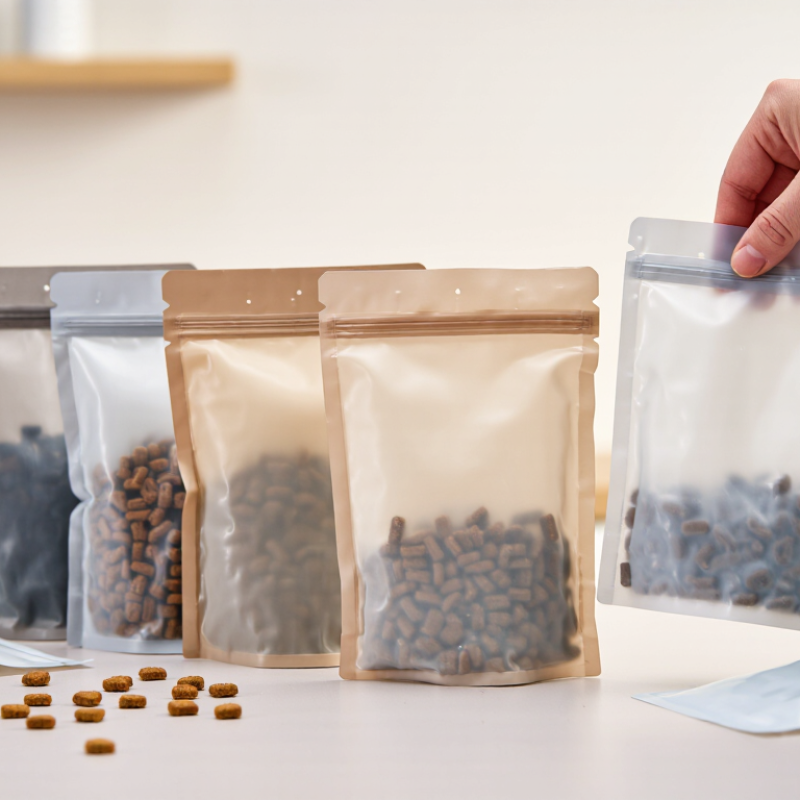
Why Choose Recyclable Doypack Pet Food Packaging?

Recyclability Standards: The EU’s 2030 Requirement for All Packaging

Why Choose Recyclable Doypack Pet Food Packaging?

The EU is changing packaging from a marketing choice into a compliance issue. Under Regulation (EU) 2025/40, packaging placed on the EU market must be recyclable by 2030. It must also meet stricter recyclability-at-scale requirements from 2038. For pet food producers, a doypack must therefore support material recovery, not only look environmentally responsible.

The numbers show why this matters. Eurostat reported 186.5 kilograms of packaging waste per person in the EU in 2022. The same report recorded an EU packaging recycling rate of 64.0%.

These figures reveal progress, but also a gap. Recyclability depends on structure, inks, adhesives, closures, and local sorting systems. A pouch may contain recyclable material, yet still perform poorly when its layers are difficult to separate.

Practical packaging trials often expose this weakness. A flexible pouch can reduce transport volume and material use, but its design must be tested against actual recycling routes. The European Commission’s Packaging and Packaging Waste Regulation links recyclability with design criteria and recovery infrastructure. This makes technical documentation essential.

Recyclable doypack pet food packaging should use compatible material structures, clear disposal guidance, and verified testing data. “Recyclable” alone is not enough. Collection systems still vary across Europe. That uncertainty deserves more attention.

Material Selection: Why Mono-PE Doypacs Replace Multilayer Films

Mono-PE doypacks are gaining attention in recyclable pet food packaging. Their structure uses polyethylene layers instead of combining incompatible plastics. This simpler design can support sorting and recycling in suitable film-collection systems. However, “recyclable” depends on local infrastructure, package design, and actual collection access.

The OECD’s Global Plastics Outlook reports that only 9% of global plastic waste was recycled in 2019. That figure exposes a practical problem. A technically recyclable pouch may still reach landfill when collection systems are limited. Mono-PE therefore reduces material complexity, but it does not solve recycling alone.

Packaging trials must also protect pet food from oxygen, moisture, punctures, and seal failure. Mono-PE films can provide strong seals and useful flexibility, yet high-barrier performance may require carefully engineered coatings or approved PE-compatible layers. The Flexible Packaging Association notes that flexible packaging uses less material than many rigid formats, although recovery remains challenging. Every gram saved matters.

A small pouch detail matters. Weak seals can create odor, leakage, and food waste during transport. Engineers should test drop resistance, seal strength, shelf life, and recyclability together. The better option is not always the thinnest one. Sometimes, a slightly heavier Mono-PE structure prevents larger environmental losses through spoiled food. Industry data guides decisions, but real packaging trials still reveal uncomfortable gaps.

Resource Efficiency: Flexible Packaging Uses Up to 60% Less Plastic

Why Choose Recyclable Doypack Pet Food Packaging?

A recyclable doypack can reduce material use without sacrificing everyday practicality. Flexible packaging may use up to 60% less plastic than comparable rigid containers, depending on size and design. Less plastic can mean lower packaging weight, reduced transport demand, and fewer raw materials. The pouch also stands upright on shelves and stores neatly after opening. That matters in real kitchens, where space is rarely generous.

Still, the 60% figure is not magic. It depends on the comparison method, barrier layers, closure, and recycling system. Packaging specialists should review the full structure, not only its weight. A recyclable pouch must also reach suitable collection facilities. Otherwise, a technically recyclable package may remain difficult to recover. This is an area that needs honest improvement.

Tips: Check local recycling guidance before choosing a pouch. Empty the package completely and keep food residue low. Select a format with a practical opening and secure reseal. Measure servings carefully, because smaller portions can reduce waste. Ask suppliers for material details and verified recyclability evidence. Clear information builds trust. Small design choices matter.

Why Choose Recyclable Doypack Pet Food Packaging?

Flexible packaging can use up to 60% less plastic than comparable rigid packaging. This index uses rigid packaging as the 100-point baseline; a value of 40 represents a 60% reduction in plastic use.

Pet Food Safety: How Barrier Layers Protect Quality and Shelf Life

Why Choose Recyclable Doypack Pet Food Packaging?

Pet food needs more than an attractive pouch. It needs a controlled barrier against oxygen, moisture, light, and contamination. These threats can reduce flavor, texture, and nutritional value. They may also shorten shelf life.

A dry-kibble pouch may face warm warehouses, transport vibration, and repeated opening at home. A strong oxygen barrier helps slow fat oxidation and unpleasant odors. Moisture resistance keeps pieces crisp instead of soft. A light-blocking layer can protect sensitive nutrients from exposure. Small details matter.

The seal matters too. A perfect film cannot protect food if the closure leaks. Packaging teams should check seal strength, puncture resistance, and oxygen and moisture transmission rates. Drop tests and storage trials reveal weaknesses that visual checks miss. Shelf life should come from validated testing, not a convenient estimate.

A recyclable doypack may use a simpler, compatible film structure. This can support recycling where suitable collection systems exist. However, local recycling rules vary widely. No format is perfect. A thinner pouch may reduce material use, yet it can lose strength during handling. I would verify the complete structure, food-contact suitability, and test results before making a sustainability claim. Reliable packaging balances protection, practical use, and realistic end-of-life options.

Why Choose Recyclable Doypack Pet Food Packaging? - Pet Food Safety: How Barrier Layers Protect Quality and Shelf Life

Packaging Dimension Typical Data or Target How It Protects Pet Food Recommended Recyclable Doypack Approach Verification Method
Moisture Protection Target WVTR: approximately <1.0 g/m²/day for moisture-sensitive dry food packaging, depending on product and shelf-life requirements. Limits water-vapor transmission that can cause kibble softening, clumping, mold growth, texture loss, and reduced palatability. Use a properly engineered mono-material PE or PP structure with a high-barrier sealant layer and carefully controlled seals. ASTM F1249 or equivalent water-vapor transmission testing.
Oxygen Protection High-barrier designs commonly target OTR values below 1.0 cc/m²/day at defined temperature and relative humidity conditions. Reduces oxidation of fats and vitamins, helping control rancid odors, flavor deterioration, and nutrient loss. Use a recyclable high-barrier polymer structure or a compatible barrier coating. Barrier performance must be confirmed after forming and sealing. ASTM D3985 or equivalent oxygen transmission testing.
Water Activity Control Water activity below 0.60 is widely used as a practical control point for shelf-stable low-moisture foods; pathogen-control requirements depend on the complete formulation and process. Low water activity limits microbial growth and helps maintain the intended crispness and physical stability of dry pet food. Combine adequate product drying with a high-moisture-barrier pouch. Packaging cannot compensate for insufficient drying or poor storage conditions. Water-activity measurement using a calibrated water-activity meter.
Grease and Aroma Barrier Barrier performance varies by polymer, coating, thickness, and food fat content; product-specific migration and odor testing is required. Helps prevent fat absorption into the pouch, external greasy surfaces, aroma loss, and unwanted odor transfer during storage. Specify an inner food-contact layer with suitable grease resistance and confirm compatibility with high-fat recipes. Food-contact compliance review, grease-resistance testing, and sensory evaluation.
Seal Integrity Seal strength should be established from the actual material, seal temperature, dwell time, pressure, and filling conditions. There is no universal value for every pouch. Strong, continuous seals prevent leakage, oxygen ingress, moisture ingress, and contamination through microscopic channels. Use a sealant layer designed for the selected recyclable PE or PP structure, with validated sealing windows and contamination tolerance. ASTM F88 for seal strength; ASTM F1929 or ASTM F2338 for leak testing.
Puncture and Tear Resistance Required performance depends on pouch size, fill weight, transport vibration, drop height, and kibble shape. Test the finished pouch rather than film alone. Reduces pinholes and package failures caused by sharp food pieces, handling, stacking, and transportation. Optimize film thickness, directional strength, gusset geometry, rounded corners, and tear-notch design without adding unnecessary material. ASTM D1709, ASTM D2582, drop testing, and distribution simulation.
Light Protection Opaque or metallized barrier layers can reduce light transmission; the required level depends on the sensitivity of fats, vitamins, colors, and flavors. Limits photo-oxidation, which can accelerate fat rancidity and degradation of light-sensitive nutrients. Choose an opaque recyclable structure or a compatible barrier coating when light exposure is a significant shelf-life risk. Total light-transmission testing and accelerated shelf-life evaluation.
Recyclability Design Mono-material PE or mono-material PP designs are generally more compatible with flexible-plastic recycling systems than mixed-material laminates, subject to local acceptance. Fewer incompatible materials can improve sorting and recycling potential while reducing dependence on difficult-to-separate layers. Design for one dominant polymer family, minimize non-compatible components, and verify compatibility with the intended regional collection system. Local design-for-recycling guidance, packaging-structure review, and recycler acceptance testing.
Zipper and Spout Components Resealability helps protect the product after opening, but the zipper or spout does not replace the primary barrier film. Reduces repeated exposure to ambient humidity and oxygen during household use and helps prevent spills. Use a compatible PE or PP zipper, or another component accepted by the target recycling stream. Validate the zipper area separately. Repeated-opening tests, leak testing, and post-opening storage evaluation.
Shelf-Life Validation Shelf life must be established from real product data; common evaluations monitor moisture, water activity, peroxide value, sensory quality, nutrients, and package integrity. Confirms that the complete product-and-package system maintains safety and quality throughout distribution and storage. Test the final filled doypack under intended and accelerated conditions, including temperature, humidity, light, and handling stresses. Real-time and accelerated shelf-life studies using documented acceptance criteria.
Food-Contact Compliance All layers, inks, adhesives, coatings, and components that may contact food must comply with the regulations applicable to the market of sale. Helps control chemical migration and ensures that packaging materials are suitable for contact with pet food. Request supplier declarations, composition information, migration documentation, and change-control records for every packaging component. Applicable food-contact regulations, migration testing, and supplier documentation.
Material Efficiency A doypack can use less packaging material by weight than many rigid formats, but the actual reduction depends on size, thickness, closure type, and performance requirements. Lower material use can reduce packaging mass and transport volume while maintaining adequate protection. Use right-sized dimensions, optimized film thickness, lightweight closures, and barrier performance based on measured need rather than excessive layering. Packaging-weight comparison and full life-cycle assessment where required.
Important qualification: Barrier values are engineering targets or typical design ranges, not universal guarantees. Actual performance depends on material grade, thickness, humidity, temperature, pouch construction, seal quality, filling process, storage conditions, and the specific pet food formulation. Recyclability also depends on the collection, sorting, and recycling infrastructure available in the target market.
Technical reference basis: ASTM D3985 for oxygen transmission rate, ASTM F1249 for water-vapor transmission rate, ASTM F88 for heat-seal strength, ASTM F1929 and ASTM F2338 for package leak detection, ASTM D1709 for impact resistance, ASTM D2582 for tear resistance, and applicable food-contact and packaging-recycling requirements in the destination market.

End-of-Life Reality: What the U.S. 8.7% Plastic Recycling Rate Reveals

Why choose recyclable doypack pet food packaging? The strongest answer begins at disposal, not the filling line. A widely cited U.S. figure shows that only 8.7% of plastic waste was recycled in 2018. That figure is not a promise about today. It is a warning about collection, sorting, and end markets. A package may be technically recyclable yet rarely accepted locally. Reality bites.

Recyclable doypacks can reduce material complexity when they use structures compatible with established recycling systems. This design may simplify sorting compared with multi-material laminates. However, pet food requires strong protection from oxygen, moisture, grease, and aroma loss. Packaging engineers must test seal strength, puncture resistance, shelf life, and real recycling compatibility. A thinner bag is not automatically a better bag. Performance still matters.

End-of-life instructions should match local waste guidance. Pet owners can empty the package, remove excess food, and check nearby collection rules. Store drop-off programs may accept certain films, while household recycling often does not. The label must stay accurate and practical. This is where the industry needs more honesty. Recyclability without access can create false confidence. Better packaging combines verified material choices, clear instructions, and measured claims. The 8.7% rate shows how much work remains.

FAQS

What must recyclable doypack pet food packaging achieve by 2030?

Under European packaging rules, packaging placed on the market should be recyclable by 2030. It must support real material recovery, not only display an environmental claim. A recyclable label alone is insufficient.

Why are Mono-PE doypacks used in recyclable packaging?

Mono-PE structures use polyethylene layers instead of mixed plastic combinations. This simpler design may support sorting and recycling in suitable film-collection systems. It is not a complete solution.

Does Mono-PE packaging guarantee successful recycling?

No. Recycling depends on package design, local collection access, sorting equipment, and end markets. A pouch can be technically recyclable yet still reach landfill. That gap needs more honesty.

What should pet food packaging protect against?

The pouch should resist oxygen, moisture, grease, odors, and punctures. Strong seals help prevent leakage during transport. Food protection still matters.

Is a thinner pouch always more environmentally responsible?

Not always. A slightly heavier structure may prevent spoiled food and replacement packaging. Engineers should compare material use with shelf life and seal performance. Thinner is not automatically better.

Which packaging tests are important before market placement?

Useful trials include drop resistance, seal strength, puncture resistance, shelf-life testing, and recycling compatibility. Testing should reflect actual handling conditions. Laboratory results may miss uncomfortable weaknesses.

Can household recycling systems accept recyclable pet food doypacks?

Acceptance varies widely between local systems. Some store collection programs accept flexible films, while household recycling may reject them. Check nearby instructions.

What should consumers do before disposing of a pet food pouch?

Empty the pouch and remove remaining food. Then check local collection guidance before placing it in a recycling stream. Labels must give practical instructions.

Why are inks, adhesives, and closures important?

These components can affect sorting, separation, and recycling quality. Compatible structures are easier to evaluate than complex mixed-material designs. Small details matter.

What changes after 2030?

European requirements are expected to become stricter for recycling at scale from 2038. Packaging will need stronger evidence of real recovery performance. The industry may not be fully ready.

Conclusion

Recyclable Doypack Pet Food Packaging offers a practical way to balance environmental responsibility, product protection, and efficient manufacturing. As packaging regulations move toward requiring all packaging to be recyclable by 2030, mono-PE doypacks are becoming a strong alternative to conventional multilayer films, which are often difficult to separate and process. By using a compatible single-material structure, these pouches can be designed for improved recyclability while maintaining the flexibility needed for modern pet food products.

Flexible packaging can also use up to 60% less plastic than many rigid alternatives, helping reduce material consumption and transportation weight. At the same time, carefully engineered barrier layers protect pet food from oxygen, moisture, light, and contamination, supporting freshness and extending shelf life. However, the U.S. plastic recycling rate of only 8.7% shows that recyclable design alone is not enough. Effective collection systems, sorting facilities, consumer participation, and clear disposal guidance are equally important for achieving real-world sustainability.

Ethan

Ethan

Ethan is a professional marketing specialist dedicated to helping customers better understand the value, quality, and practical applications of our company’s products. With a strong background in market research, content strategy, and customer communication, he combines industry knowledge with a......