Choosing among top Alupack Pouch Wet Pet Food suppliers requires more than comparing attractive prices. The right partner should understand retort processing, moisture protection, oxygen barriers, and reliable heat sealing. These details influence shelf life, product safety, and the pouch’s performance during transport. A pouch may look excellent on screen, yet fail after filling or sterilization. Small details matter.
This guide examines supplier experience, production capability, material transparency, and quality control practices. It considers whether manufacturers can provide food-contact documentation, batch traceability, inspection records, and practical samples for testing. Strong suppliers should explain their aluminum structure, polyethylene sealing layer, puncture resistance, and printing controls clearly. They should also communicate minimum order quantities, lead times, tooling costs, and defect-handling procedures without vague promises. Buyers can request filled samples and inspect seals, corners, zippers, and tear notches under realistic conditions. That hands-on step often reveals weaknesses that brochures hide.
Supplier reputation remains useful, but it should not replace evidence. Customer references, factory audits, independent testing, and consistent responses provide stronger confidence. Some evaluations may remain incomplete, especially when public manufacturing data is limited. That is worth admitting. A lower-priced offer may become expensive after rejected batches, delayed shipments, or unsuitable packaging dimensions. This overview aims to help pet food brands compare suppliers carefully, using practical criteria rather than marketing language. Reliable decisions usually come from verified samples, clear specifications, and honest communication.
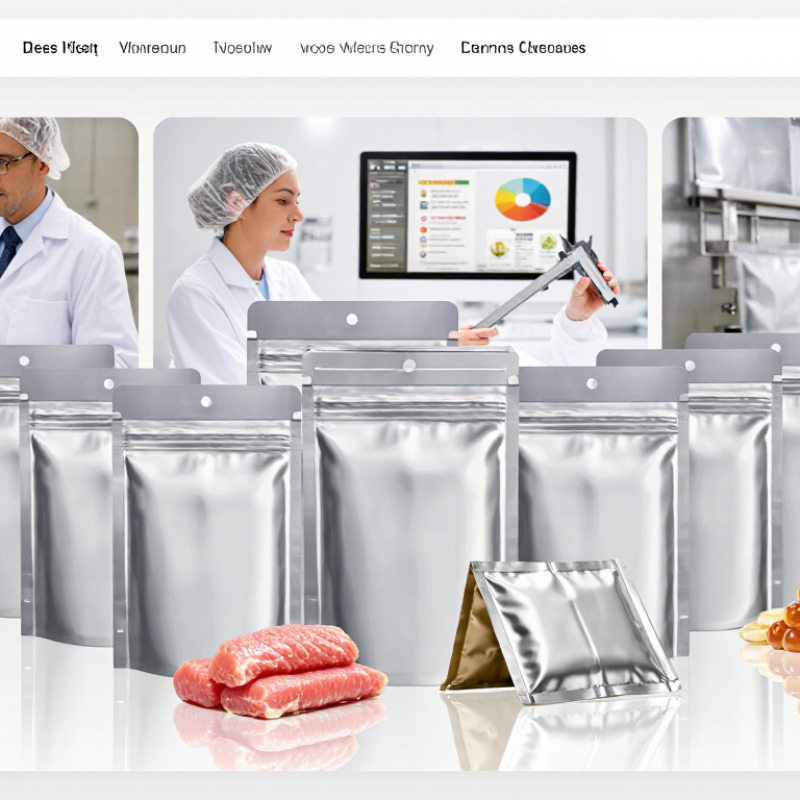
What are Alupack pouches for wet pet food? They are flexible, heat-sealed packages made from laminated layers, often including aluminum foil, polymer films, and sealant materials. The foil layer blocks oxygen, moisture, and light, helping protect meat-based recipes from oxidation and flavor loss. It feels simple. Not quite.
During practical filling trials, pouch performance depends on seal strength, foil integrity, corner design, and retort resistance. A tiny crease can become a weak point after sterilization. Alupack pouches usually suit wet food because they are lightweight, stack efficiently, and require less material than rigid cans. Their flat shape also reduces storage volume, although opening can be messier for older animals or careful portioning.
Industry data supports this format’s wider relevance. The Flexible Packaging Association’s 2024 State of Flexible Packaging report values the U.S. flexible packaging market at approximately 40 billion dollars annually. Grand View Research also estimated the global pet food market exceeded 140 billion dollars in 2023, increasing demand for durable, convenient packaging. These figures do not prove that every pouch is sustainable or superior. That assumption needs testing.
When comparing Alupack pouch suppliers, buyers should request oxygen transmission, water vapor transmission, seal-strength, and retort-validation data. Ask for production samples, not only brochures. Supplier reliability also depends on traceability, food-contact documentation, quality controls, and consistent film thickness. Recycling remains complicated because multilayer aluminum structures are difficult to separate. Better barrier protection can mean harder recovery. That trade-off deserves honest review.
Top Alupack Pouch Wet Pet Food Suppliers?
When evaluating alupack pouch suppliers, food safety evidence should come before price. FEDIAF’s 2024 Facts & Figures reports 139 million European households owned pets, creating strong demand for dependable wet food packaging. Suppliers should provide traceability records, food-contact declarations, and migration test results for every material layer. ISO 22000 or an equivalent food-safety system adds credibility, but certificates alone are not enough.
Check the pouch’s technical performance under real filling conditions. Useful documents include oxygen transmission rate, water-vapor transmission rate, seal-strength results, and retort validation. ASTM F88 seal testing can confirm whether seals tolerate handling and sterilization. Ask for production samples, then inspect wrinkles, pinholes, corner damage, and uneven seals. Small defects matter. A low quoted price may hide weak quality control.
Sustainability claims need careful examination. The Flexible Packaging Association has reported that flexible packaging uses less material than many rigid formats, yet multilayer alupack structures remain difficult to recycle in numerous systems. Suppliers should explain material composition, factory waste rates, and available lower-impact options. Request batch-level records, corrective-action history, and independent audit findings. I would also test several lots, not one perfect sample. Supplier evaluation is never completely clean; performance can drift after scale-up.
Leading Alupack wet pet food packaging suppliers combine barrier engineering, food safety, and reliable production. Aluminum-laminated pouches protect wet food from oxygen, light, and moisture. This helps preserve texture, aroma, and nutrients during distribution. APPA’s 2024 State of the Industry report recorded US pet industry spending of 147 billion dollars in 2023. That scale increases pressure on suppliers to deliver consistent packaging, not only attractive printing.
Look for suppliers with documented retort performance, controlled sealing temperatures, and traceable raw materials. Their facilities should support ISO 22000 or an equivalent food-safety system. BRCGS Packaging Materials certification can provide another useful verification point. ASTM F88 seal-strength testing and ASTM F1929 leak testing also reveal weaknesses that visual inspection may miss. Ask for test records, shelf-life evidence, and production samples from different batches. Small details matter.
A practical supplier should explain pouch thickness, aluminum-layer protection, filling compatibility, and recycling limitations. They should also discuss migration testing under intended storage conditions. The FDA’s food-contact framework remains a useful reference for material compliance in the United States. However, compliance claims need documents, not confident language. A perfect pouch does not exist. I would remain cautious when a supplier promises zero leakage without showing retort and transport data. Poor artwork cannot fix weak seals, and low prices may hide thinner layers or inconsistent workmanship.
Top Alupack Pouch Wet Pet Food Suppliers: How Suppliers Ensure Safety, Quality, and Shelf Stability
Choosing a reliable Alupack pouch supplier requires more than comparing prices. Experienced suppliers verify food-contact materials before production begins. They inspect aluminum foil, polymer layers, inks, and adhesives for consistent quality. Each layer must resist moisture, oxygen, grease, and heat. Small sealing defects can cause leaks or spoilage. That risk is easy to underestimate. Suppliers should test seal strength, pouch thickness, and dimensional accuracy on every production batch. Clear batch records also support traceability when a problem appears.
Shelf stability depends heavily on controlled thermal processing. Suppliers work with pet food producers to validate retort temperatures, pressure levels, and processing times. They examine cold spots inside filled pouches, where harmful microorganisms may survive. Laboratory testing can measure seal integrity, oxygen transmission, moisture transmission, and material migration. Accelerated aging tests provide useful evidence, but they cannot replace real-time storage studies. This is where quality teams need patience. Shortcuts may produce attractive results, yet they can weaken confidence later.
Reliable suppliers maintain calibrated equipment and documented hygiene procedures. They also audit raw material sources and train operators regularly. In practice, even a strong system needs review. Handling damage during filling, transport, or warehouse storage can still reduce shelf life. Therefore, suppliers should inspect cartons, stacking conditions, and temperature exposure throughout distribution. The best evidence comes from repeatable testing, transparent records, and corrective actions that are actually completed.
| Evaluation Dimension | Typical Requirement or Verified Data | How a Qualified Supplier Ensures It | Why It Matters for Wet Pet Food |
|---|---|---|---|
| Pouch Construction | Multi-layer structure commonly combining polyester, aluminum foil or metallized film, and food-contact polyethylene or polypropylene. | Controls incoming film specifications, adhesive performance, layer thickness, and laminate bonding strength. | The structure protects food from moisture, oxygen, light, and external contamination. |
| Food-Contact Compliance | Materials should comply with the applicable food-contact requirements in the destination market, such as United States or European Union regulations. | Maintains declarations of compliance, migration-test reports, material specifications, and supplier traceability records. | Prevents unsuitable inks, adhesives, coatings, or plastics from contacting the pet food. |
| Oxygen Barrier | Low oxygen transmission is required; the exact limit depends on product formulation, filling process, package size, and shelf-life target. | Uses laboratory oxygen-transmission testing and verifies the finished laminate rather than relying only on resin specifications. | Limits oxidation, nutrient loss, odor changes, and quality deterioration during storage. |
| Moisture Barrier | Low water-vapor transmission is expected for shelf-stable wet food packaging. | Tests water-vapor transmission, seal integrity, and laminate uniformity under defined laboratory conditions. | Helps preserve product weight, texture, and concentration while reducing the risk of package swelling or drying. |
| Retort Compatibility | Pouches must be designed for the specified retort temperature, pressure, time, and cooling cycle. | Performs retort simulation, dimensional checks, seal-strength testing, and post-process visual inspection. | The package must remain sealed and structurally stable throughout thermal sterilization. |
| Commercial Sterility | Shelf-stable wet pet food requires a validated thermal process that achieves commercial sterility for the product and package combination. | Works with qualified process authorities, records time and temperature, and reviews critical process deviations. | Reduces the risk of viable microorganisms that could grow during normal unrefrigerated storage. |
| Seal Strength | Seal-strength specifications must be established for the pouch format and validated after filling, retorting, cooling, and handling. | Uses calibrated seal-strength tests, seal-width checks, burst testing, and routine destructive inspection. | Reliable seals help prevent leakage, microbial entry, and loss of vacuum or headspace control. |
| Leak and Pinhole Detection | Finished pouches should be checked for leaks, pinholes, delamination, wrinkles across the seal, and other defects. | Combines visual inspection with vacuum, pressure-decay, dye-penetration, or other validated leak-detection methods. | Small defects can allow contamination or cause product loss even when the pouch looks acceptable. |
| Microbiological Controls | Testing plans commonly address pathogens, indicator organisms, environmental monitoring, and finished-product verification according to risk. | Uses a documented HACCP-based preventive-control program, hygienic zoning, sanitation validation, and corrective actions. | Controls contamination before and after filling and supports consistent product safety. |
| Manufacturing Certification | Recognized food-safety systems may include HACCP-based programs, ISO 22000, BRCGS, or other accepted third-party schemes. | Provides current certificates, audit scopes, corrective-action records, and evidence that the certificate covers the relevant packaging process. | Independent audits provide structured verification of food-safety management and production controls. |
| Dimensional Accuracy | Pouch length, width, gusset size, spout position, and seal area must remain within agreed production tolerances. | Uses approved technical drawings, in-line measurement, sampling plans, and batch-release inspection. | Consistent dimensions support reliable filling, sealing, retort loading, and automated packing. |
| Print and Ink Safety | Printed surfaces should be protected from direct food contact, with controlled ink adhesion and low risk of set-off or transfer. | Verifies ink documentation, rub resistance, print adhesion, curing conditions, and migration-related requirements. | Maintains label readability and helps prevent unwanted substances from reaching the food. |
| Shelf-Life Validation | Shelf life should be supported by real-time and, where appropriate, accelerated studies using the final food, pouch, and process. | Monitors package integrity, sensory quality, microbiological condition, oxidation indicators, and nutritional attributes at defined intervals. | Confirms that the complete product system—not just the empty pouch—remains safe and acceptable through its intended life. |
| Traceability | Each production lot should be traceable to raw materials, manufacturing records, test results, and shipment details. | Uses lot coding, retained samples, documented batch records, and a tested recall or mock-recall procedure. | Enables fast investigation and targeted action if a packaging or food-safety issue occurs. |
| Storage and Distribution Testing | Packaging should withstand expected compression, abrasion, vibration, temperature variation, and humidity during transport and storage. | Conducts packaging-performance trials, pallet assessments, drop or compression testing, and post-transport seal inspections. | Reduces damage-related leakage and preserves shelf stability from production through retail handling. |
Note: Exact material specifications, test limits, thermal-process parameters, and shelf-life claims should be established through product-specific validation and the regulatory requirements of the target market.
Choosing an alupack pouch supplier requires more than comparing prices. Check experience with wet pet food, pouch structures, and high-temperature processing. A reliable supplier should explain each material layer clearly. Ask about aluminum thickness, sealant performance, oxygen transmission, and moisture resistance. These details protect aroma, texture, and shelf stability.
Request production samples with your actual filling weight and sealing equipment. Inspect the pouch after heating, cooling, stacking, and transport simulation. Look for wrinkles, weak corners, leaking seals, or layer separation. A clean sample is useful, but it proves little alone. Review food-contact declarations, test reports, batch traceability, and quality-control procedures. An on-site or remote factory audit can reveal storage problems that documents may not show. Do not overlook communication. Slow replies can become costly during artwork changes or urgent production issues.
Ask for seal-strength data from several production lots. Confirm minimum order quantities, lead times, and replacement procedures in writing. Test printed colors under your retail lighting. Also, keep a small reserve of approved pouches for comparison. Supplier selection is never perfect; one overlooked detail can affect filling efficiency. Recheck assumptions before signing a long-term agreement.
It should block oxygen, light, and moisture. This helps preserve aroma, texture, and nutrients during storage.
Request food-contact declarations, migration test results, shelf-life evidence, and batch traceability records. Confident claims are not enough.
Retort testing shows whether pouches survive high-temperature processing. Check for seal failure, wrinkles, swelling, and layer separation afterward.
Ask for seal-strength data from several production batches. Leak testing can reveal weak corners that visual inspection misses.Small weaknesses matter.
The supplier should explain pouch thickness, aluminum-layer protection, sealant performance, and resistance to oxygen and moisture.
Yes. Use the intended filling weight and sealing machine. Then test heating, cooling, stacking, and transport conditions.
Confirm minimum order quantities, lead times, replacement procedures, and artwork-change processes in writing. Slow communication can disrupt production.
Not always. Lower prices may reflect thinner layers or inconsistent workmanship. Review test records before judging the total cost.
Watch for unclear material explanations, missing batch records, weak documentation, and promises of zero leakage. I would also question samples from only one batch.
Alupack Pouch Wet Pet Food packaging is a lightweight, flexible solution made with aluminum-based barrier materials to protect wet pet food from oxygen, moisture, light, and contamination. This format can help preserve flavor, nutrition, and freshness while reducing packaging weight and improving convenience for storage, transport, and feeding. When evaluating suppliers, buyers should examine material structure, pouch strength, sealing performance, printing quality, production capacity, quality-control systems, and experience with pet food applications.
Reliable suppliers support product safety and shelf stability through controlled manufacturing, suitable food-contact materials, precise heat sealing, leak testing, and consistency checks throughout production. They should also provide technical documentation, sample testing, customized pouch options, and dependable delivery schedules. To choose the right Alupack Pouch Wet Pet Food supplier, companies should compare quality standards, technical support, minimum order quantities, customization capabilities, communication, and total cost. A supplier that combines stable performance, transparent processes, and responsive service can help manufacturers develop packaging that protects product quality and supports efficient market distribution.