Sourcing Natural Dried Meat Strips Dog Treats in 2026 requires more than comparing prices. Buyers must connect ingredient quality, supplier evidence, and dog safety. A reliable process starts with the meat source, processing method, and complete traceability. Ask where animals were raised, where strips were produced, and how each batch is identified. Simple questions reveal weak systems. Sometimes, the cheapest quote hides expensive uncertainty.
Experienced purchasers should request current specifications, allergen statements, microbial test results, and shelf-life data. Check whether testing covers pathogens, moisture, and water activity. These details help explain why one strip feels dry and firm, while another becomes oily or brittle. Inspect packaging for intact seals, readable dates, storage instructions, and lot codes. If possible, order samples from separate batches. One attractive sample proves very little.
Veterinary and food-safety guidance should shape the final decision, especially for puppies, older dogs, or animals with allergies. Suppliers should communicate recalls, formulation changes, and corrective actions openly. Certifications can support trust, but they do not replace independent verification. Requirements also vary by market, so local compliance checks remain essential. This guide focuses on practical sourcing decisions, while admitting an uncomfortable truth: no supplier review is perfect. Careful records, honest questions, and repeated checks offer the strongest protection for dogs and buyers.
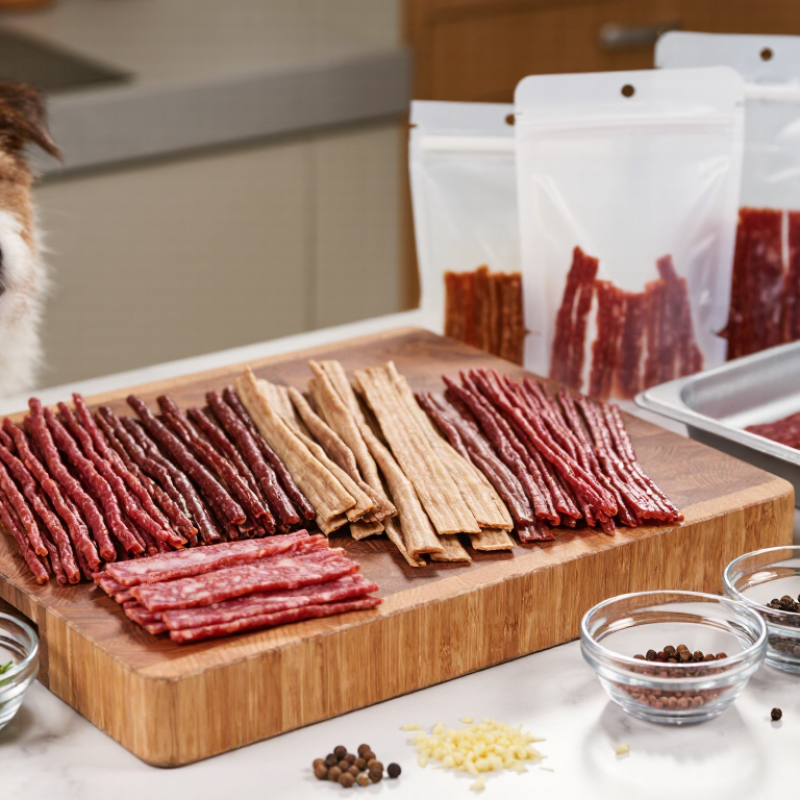
In 2026, sourcing natural dried meat strips should begin with demand, not packaging. APPA valued U.S. pet spending at $150.6 billion in 2024. That figure includes food, veterinary care, supplies, and services. It still shows strong household commitment. The 2023–2024 APPA National Pet Owners Survey counted 65.1 million U.S. dog-owning households. Many buyers now scrutinize ingredient lists. Not everyone seeks the cheapest treat.
Packaged Facts’ 2024 analysis of U.S. pet treats and chews identifies natural positioning as a major purchasing theme, while noting continued price pressure. This tension matters. Suppliers should verify meat origin, drying temperature, moisture targets, and batch testing before placing large orders. A short ingredient list helps. It is not proof of quality. Request certificates of analysis, pathogen controls, traceability records, and shelf-life evidence. One weak document can damage a strong product.
Use APPA’s spending figure as a market signal, not a guaranteed sales forecast. Test two or three strip sizes with dog owners. Record repeat-purchase intent, breakage, odor, and pouch-opening ease. Keep the feedback uncomfortable. Dogs may enjoy treats that owners dislike handling. Ingredient claims also require careful review under applicable labeling rules. USDA and FDA guidance should shape wording, records, and facility checks. I would begin with a controlled pilot, because demand estimates can look precise while reorder data remains missing.
U.S. pet industry spending by category in 2024, providing market context for natural dog treat sourcing.
The American Pet Products Association reported total U.S. pet industry spending of $150.6 billion in 2024. Food and treats represented the largest category at $65.8 billion, making ingredient quality, product safety, and reliable sourcing important considerations for natural dried meat strip suppliers.
When sourcing natural dried meat strips in 2026, set the calorie limit before choosing suppliers. WSAVA guidance recommends keeping treats below 10% of a dog’s daily calories. The remaining 90% should come from a complete, balanced diet. This simple rule prevents attractive treats from quietly causing weight gain.
Request calories per strip, not only calories per 100 grams. Strip size can vary widely. A 6-gram piece may suit a small dog, while a larger piece may exceed its daily allowance. For example, a 20-kilogram dog needing 800 daily calories should receive no more than 80 treat calories. Ask for feeding calculations based on veterinary guidance. Packaging should show ingredients, guaranteed analysis, lot identification, storage instructions, and an honest calorie estimate.
Natural does not automatically mean appropriate. Confirm the meat source, drying temperature, moisture control, and pathogen testing records. Reject samples with a sour smell, oily residue, mold, or inconsistent thickness. I would also test several batches, because one good sample proves little. Supplier paperwork may look complete yet miss practical details, such as calories changing after drying. A cautious buyer should review the final specification with a veterinarian or qualified animal nutrition professional, especially for overweight dogs, puppies, or dogs with medical diets. Keep treats small and count them daily. Mistakes happen. Oversized strips are easy to overlook.
| Specification Dimension | Recommended Buyer Requirement | Supplier Evidence or Verification | Practical Sourcing Note |
|---|---|---|---|
| Product Type | Single- or limited-ingredient dried meat strips intended as complementary dog treats, not as a complete and balanced diet. | Review the ingredient statement, product description, intended-use statement, and feeding directions before approval. | Keep the treat specification separate from the specification for a complete maintenance diet. |
| Primary Ingredient | A clearly identified animal ingredient, such as chicken, turkey, beef, lamb, or fish. Avoid vague terms such as “meat derivatives” when ingredient transparency is required. | Obtain the full ingredient list, ingredient-origin declaration, supplier statement, and batch traceability records. | Select the animal ingredient according to the intended market, known dietary sensitivities, and the product’s declared name. |
| Ingredient Simplicity | Prefer no unnecessary colorants, sweeteners, artificial smoke flavor, or unlisted processing aids. Any additive must be legally permitted in the target market. | Check the complete formula, additive declarations, technical data sheet, and applicable food or feed regulations in each destination country. | “Natural” should be treated as a claim requiring regulatory review, not as proof of safety or nutritional adequacy. |
| Calorie Declaration | Provide metabolizable energy in kcal per 100 g and kcal per strip, using a consistent calculation or laboratory method and a defined serving size. | Request a laboratory report or documented formulation calculation and confirm that the declared values are consistent with the finished product. | Calorie information is essential because treat portions should be counted within the dog’s daily energy allowance. |
| Treat-Calorie Limit | Set feeding guidance so that treats and other extras provide no more than 10% of the dog’s daily calories; at least 90% should come from a complete and balanced food. | Check the serving chart against the declared kcal per strip and against the dog’s individual daily energy requirement. | The 10% figure is a general guidance point. Calorie needs vary with body size, life stage, activity, health, and neuter status; veterinary advice may be needed. |
| Serving Calculation | Use: maximum daily treat calories = 10% × estimated daily energy requirement. Then calculate: maximum strips = maximum daily treat calories ÷ kcal per strip. | Confirm that the packaging includes a clear example and instructs owners to reduce the main diet when appropriate. | Example only: a dog requiring 500 kcal/day would have a general treat allowance of up to 50 kcal/day before individual veterinary adjustments. |
| Moisture and Drying | Define a finished-product moisture target suitable for the chosen shelf life and packaging system. A practical procurement range for many shelf-stable dried meat treats is approximately 8–20% moisture, subject to validation. | Require moisture testing for development and routine batch verification. Validate water activity, shelf life, and microbial stability rather than relying on moisture alone. | Moisture percentage by itself does not establish safety; water activity and process controls are also important. |
| Water Activity | Establish a validated water-activity specification that supports the claimed shelf life and inhibits the growth of relevant microorganisms. | Request water-activity results from representative finished batches and review the laboratory method, sampling plan, and acceptance limit. | Do not use an arbitrary limit without product-specific shelf-life and safety validation. |
| Pathogen Controls | The product must comply with applicable microbiological requirements and be controlled for relevant hazards, including Salmonella and pathogenic Escherichia coli where applicable. | Review the hazard analysis, validated lethality step, environmental monitoring program, finished-product testing, and corrective-action records. | Testing alone is not a substitute for hygienic manufacturing, validated processing, and effective post-process contamination controls. |
| Animal-Origin Safety | Require documented controls for approved raw materials, incoming inspection, segregation, foreign-material prevention, and traceability from raw material to finished batch. | Audit the supplier’s food-safety plan and request certificates of analysis, lot records, recall procedures, and supplier-approval records. | Higher-risk raw materials, including poultry and fish, require appropriate temperature control and validated handling procedures. |
| Physical Form | Define strip length, width, thickness, and acceptable variation. Edges should be free from dangerous sharp fragments, excessive splinters, or hard foreign material. | Use a written product standard, representative samples, dimensional checks, and foreign-material inspection records. | Choose a size and texture appropriate to the dog’s size and chewing behavior; supervision is recommended for chewable treats. |
| Texture and Breakability | Specify whether the strips should be flexible, semi-flexible, or crisp, and require consistent breakability for portion control. | Conduct lot-by-lot sensory and physical checks, supported by documented acceptance criteria and retained samples. | Breakable strips can make it easier for owners to keep treat calories within the daily allowance. |
| Allergen and Cross-Contact Management | Identify animal proteins and other regulated allergens used at the facility. Require controls for shared equipment and cross-contact. | Review the allergen-control plan, cleaning validation, production sequencing, label review, and relevant test results where justified by risk. | Do not describe a product as suitable for an allergic dog unless the claim is supported by veterinary and manufacturing controls. |
| Label and Feeding Directions | Include product identity, ingredient list, net quantity, feeding directions, storage instructions, lot identification, best-before date, and a statement that the treat is not a complete diet where required. | Complete a regulatory label review for every destination market before printing or listing the product. | Feeding directions should explain that treats count toward daily calories and should not replace a complete and balanced food. |
| Packaging | Use packaging that protects against moisture, oxygen, light, pests, and physical damage for the entire validated shelf life. | Review packaging specifications, seal-integrity checks, migration or food-contact documentation, and transport-condition testing. | Resealable packaging may help preserve quality after opening, but the label should still state storage instructions and any post-opening use period. |
| Shelf-Life Validation | Establish the best-before period using real-time or scientifically justified accelerated studies that assess safety, moisture, rancidity, texture, and palatability. | Request the shelf-life protocol, test results, retained-sample records, and documented basis for the expiration or best-before date. | Shelf life must be validated for the actual formula, drying process, packaging, and storage conditions. |
| Batch Traceability | Every finished package must be linked to a production lot, raw-material lots, processing date, packaging records, and distribution records. | Conduct a mock recall and verify that affected lots can be identified and withdrawn promptly. | Traceability is a core sourcing requirement for managing complaints, nonconformities, and recalls. |
| Supplier Qualification | Approve suppliers using documented food-safety controls, regulatory compliance, quality history, capacity, change-control procedures, and complaint handling. | Use a supplier questionnaire, document review, risk-based audit, sample approval, and periodic performance review. | Requalify the supplier after significant changes to ingredients, processing, facility, packaging, or manufacturing location. |
| Veterinary and Consumer Safety | Include a direction to supervise feeding, provide fresh drinking water, and consult a veterinarian for dogs with medical conditions, obesity, food allergies, or therapeutic diets. | Review consumer instructions for clarity, consistency with calorie data, and compliance with applicable labeling rules. | Treats should support positive interaction without displacing nutritional requirements or undermining a prescribed diet. |
Sourcing natural dried meat strips in 2026 requires more than checking ingredient labels. Supplier verification should begin with a documented hazard analysis under FDA 21 CFR Part 507. This rule requires animal-food facilities to follow current good manufacturing practices and establish risk-based preventive controls. HACCP is not a substitute for Part 507 compliance, but it gives buyers a practical control structure.
Ask suppliers to identify Salmonella, Listeria, foreign-material, and allergen risks. Request validation for the heating or drying step, including time, temperature, and water-activity records. A certificate of analysis helps, but it cannot replace your own supplier review. Check batch coding, recall procedures, sanitation logs, and traceability from raw meat to finished pouch. FDA’s 2023 Reportable Food Registry data continues to show microbiological contamination as a recurring food-safety concern. The lesson is uncomfortable: paperwork alone does not prove control. APPA reported that U.S. pet-industry spending reached approximately $152 billion in 2024, increasing pressure for dependable, scalable suppliers.
Tips: Audit the facility remotely first. Then inspect it in person. Compare production records with laboratory results. Confirm that the laboratory uses suitable, validated methods. Review water activity, not only moisture percentage. Natural processing can vary between batches, especially when meat thickness changes. I would also test retained samples periodically, even when supplier certificates look complete. That extra step costs money, but a certificate may reflect only one sample. Keep corrective-action records and reassess suppliers after formulation, equipment, or facility changes.
Sources: FDA, 21 CFR Part 507; FDA, Reportable Food Registry Annual Report, 2023; American Pet Products Association, State of the Industry Report, 2025.
When sourcing natural dried meat strips in 2026, treat “natural” as a starting claim, not proof of quality. APPA’s 2024–2025 National Pet Owners Survey estimates that 94 million U.S. households own a pet, increasing pressure for dependable treat supply. Ask each supplier which facility produced the meat and whether USDA-FSIS inspection applies. Request the establishment number, inspection status, product specification, and production date. A label alone is weak evidence.
Review a batch-specific Certificate of Analysis (COA), not a generic template. The report should match the lot number printed on the cartons. Check Salmonella, pathogenic E. coli, moisture, and water activity results. For ingredients with regional contamination concerns, consider heavy-metal testing. Confirm the laboratory’s accreditation and test methods. USDA-FSIS inspection records can support slaughter and processing verification, but they do not replace finished-product testing. FDA and AAFCO requirements may also apply, depending on formulation and claims. I would reject unexplained gaps. However, paperwork can still miss a handling failure after testing.
Tips:
One uncomfortable truth remains: even a clean COA represents one batch, not permanent supplier quality. Supplier audits, traceability exercises, and periodic retesting are still necessary.
When sourcing natural dried meat strips in 2026, I compare offers with one spreadsheet, not attractive samples alone. A supplier should state raw material origin, cut size, drying method, and finished moisture range. I request a production sample from the proposed lot. That detail matters because a glossy sample may not represent regular output. Measure yield from 10 kilograms of raw meat to sellable strips, including trimming and breakage. A 38% yield can outperform a cheaper offer with 29% yield. My calculation is not perfect; trimming practices can change it.
Cost needs two views: quoted unit price and landed cost.
Add packaging, testing, freight, duties where applicable, and expected waste. Compare MOQ against realistic monthly demand. A low price with a 2,000-kilogram MOQ may trap cash and reduce freshness. Ask for lead time in stages: approval, production, testing, and dispatch. Record normal and peak-season estimates. Delays often begin before production, especially when specifications remain unclear.
Tips: Ask for lot-level traceability, not vague claims. Each shipment should connect to a supplier record, raw material source, production date, batch code, and test documents. Confirm how complaints, recalls, and replacement decisions are handled. Keep retained samples for comparison. Use a weighted score for yield, MOQ, landed cost, lead time, and traceability. I would not let traceability lose to price, although budget pressure makes that choice uncomfortable. One more practical check: inspect strip thickness by hand. Uneven pieces can dry differently and create inconsistent customer experiences.
Treats should stay below 10% of a dog’s daily calories. The remaining 90% should come from complete food. For an 800-calorie diet, treats should provide no more than 80 calories. Mistakes happen.
Strip sizes can vary greatly. A six-gram piece may suit a small dog. A larger strip may exceed its daily allowance. Calories per 100 grams are not enough.
Packaging should list ingredients, guaranteed analysis, storage instructions, lot identification, and calorie estimates. The estimate should reflect the finished dried product. Drying can change calorie concentration.
No. Natural does not automatically mean appropriate. Check the meat source, drying temperature, moisture control, and pathogen testing records. Review uncertain specifications with a veterinarian or qualified nutrition professional.
Reject strips with a sour smell, oily residue, mold, or uneven thickness. Several batches should be tested. One good sample proves little.
Measure sellable output from 10 kilograms of raw meat. Include trimming and breakage. A 38% yield may outperform a cheaper 29% yield. My calculation is not perfect.
Add packaging, testing, freight, applicable duties, and expected waste. Compare the total cost, not only the quoted unit price. A low price can still consume too much cash.
Compare the minimum order with realistic monthly demand. A 2,000-kilogram order may reduce freshness. Request separate timelines for approval, production, testing, and dispatch. Delays often begin early.
Each shipment should connect to a supplier record, raw material source, production date, batch code, and test documents. Confirm complaint, recall, and replacement procedures. Keep retained samples.
Use a weighted score for yield, minimum order, landed cost, lead time, and traceability. Inspect strip thickness by hand. Price should not erase traceability. That choice can feel uncomfortable.
Sourcing Natural Dried Meat Strips Dog Treats in 2026 requires a structured approach that connects market demand with product safety and commercial feasibility. Begin by assessing the strong U.S. pet market, valued at $150.6 billion in 2024, then define treat specifications around simple ingredients, suitable sizes, texture, and feeding guidance. Treat portions should remain within the recommended 10% of a dog’s daily calorie intake so the product supports responsible use.
Supplier verification is equally important. Review manufacturing controls under FDA 21 CFR Part 507 and HACCP principles, confirm that meat ingredients come from USDA-FSIS-inspected sources, and request current batch Certificates of Analysis. When comparing offers, evaluate usable yield, minimum order quantity, unit cost, production lead time, documentation quality, and traceability. A supplier that balances consistent quality, transparent records, reliable delivery, and scalable pricing will provide a stronger foundation for long-term sourcing.