Choosing an OEM Canned Cat Food manufacturer means finding a partner that can turn a product brief into a consistent, clearly documented food. The right choice affects more than the recipe. It shapes ingredient sourcing, texture, can size, labeling, production schedules, and the experience customers have when they open each tin. A smooth pâté may look simple, but its ingredients and processing requirements need careful coordination. Details matter.
Start by asking how the manufacturer develops and reviews formulations, checks incoming ingredients, and monitors production batches. Request relevant quality documents and examples of traceability records. Ask what testing is performed, how results are shared, and how concerns are handled. Capabilities vary. A supplier that serves one brand well may not suit another’s recipe, order volume, or packaging needs. Compare minimum order quantities, lead times, sample procedures, and communication practices before making a commitment.
Factory tours or video calls can help you see how a team works, though a polished presentation is not proof of consistent performance. Ask specific questions about a real production run. Then check that answers match written specifications and records. Consider whether the manufacturer can explain trade-offs in plain language, not just promise low costs or fast delivery. Even a careful evaluation has limits; a sample cannot reveal every issue that may appear over time. Choosing an OEM Canned Cat Food partner is therefore a process of gathering evidence, checking assumptions, and leaving room to reassess as your product and needs evolve.
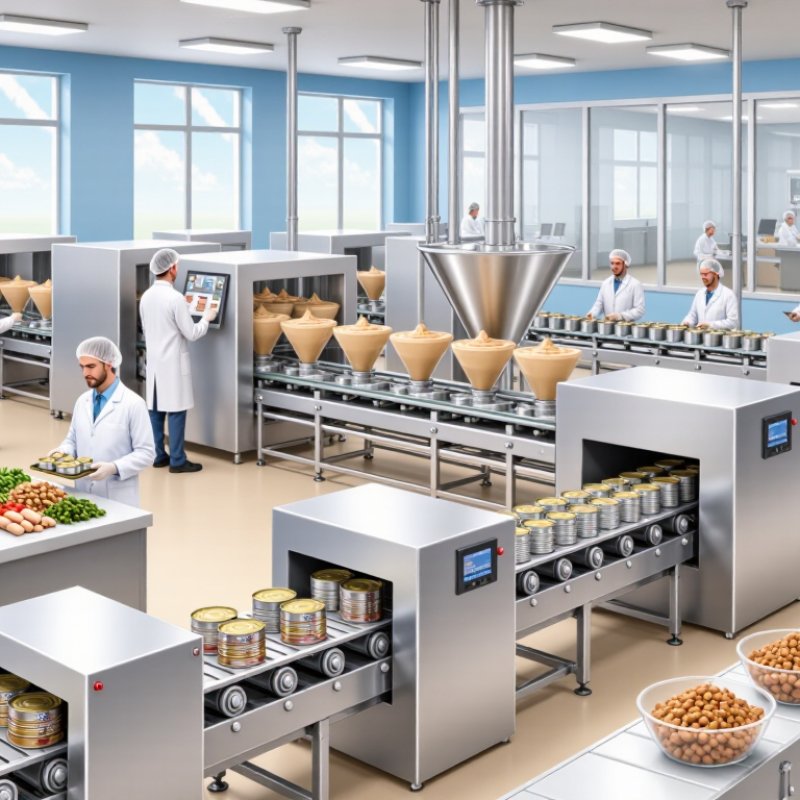
Before contacting an OEM canned cat food manufacturer, define what you want in the can. Specify the cat’s life stage, intended feeding purpose, texture, and preferred ingredients. “Pâté” is not precise enough; describe whether you want a smooth, firm loaf or a softer texture with visible pieces. Note the can size, serving guidance, and packaging requirements. Your first brief may be incomplete. That is normal.
Set measurable requirements, too. Share target nutrient levels and ask how the manufacturer checks finished products against the agreed specification. Have a qualified animal nutrition professional review the formulation, especially if you plan to make a nutritional adequacy claim. Clarify ingredient sourcing, batch records, production capacity, minimum order quantities, and sample timelines. Ask what processing controls protect product safety and consistency, and request relevant testing documentation. A sample can look right but still differ in texture or fill weight at production scale. Small details matter. Be realistic about trade-offs: a preferred ingredient, can size, or order volume may affect cost and feasibility. Record open questions in the brief, then revise it after reviewing a pilot batch.
Before discussing recipes or production volume, verify that the manufacturer holds the registrations, permits, and approvals required for your target markets. Requirements can differ by country and product type, so ask which rules apply and how compliance is maintained. Request recent inspection records, food-safety procedures, and evidence of a functioning hazard-control plan. A certificate on the wall is not enough; check its scope and expiry date. Small details matter. Can staff trace a finished can back to its ingredient lot and production shift?
During a site review, observe how ingredients move through the facility. Are opened materials labeled? Are clean tools kept apart from used ones? These details can reveal whether written procedures match daily practice. You may not be able to inspect every shift, and a single visit has limits. Request independent audit findings where available, then discuss any gaps and their resolution. Also agree on who retains product samples and records, and how quickly the manufacturer can support a traceability check or investigate a quality complaint.
How to Choose an OEM Canned Cat Food Manufacturer
Assess Production Capacity, Formulation, and Packaging Options
A manufacturer’s stated capacity matters only if it matches your launch plans. Ask how many cans a production line can fill per shift, and whether that figure includes changeovers and cleaning. Request a sample production schedule, not just a maximum output estimate. A small trial run can reveal delays that look invisible on paper.
Check who develops and reviews the formula. Discuss ingredient specifications, texture, moisture level, and the target nutritional profile with the manufacturer’s technical team. Ask how formula changes are documented and how ingredient batches are tracked. These details help keep repeat orders consistent. Still, a polished sample is not proof that every production run will match it.
Packaging affects both shelf presentation and factory efficiency. Compare can sizes, lid types, label materials, and carton configurations. Ask which options the line can handle without custom tooling, and request samples you can inspect by hand. A compact can may suit smaller servings, but it could also raise packaging costs. I would verify that trade-off with actual quotes; estimates are easy to misread. Run a trial. Check the sealed cans for dents, leaks, and clear date coding before approving a larger order.
| Assessment area | What to evaluate | Useful information to request | Positive selection signal | How to verify |
|---|---|---|---|---|
| Production capacity | Available output for the specific can size, recipe type, and production schedule—not just the facility’s total capacity. | Line capacity in cans per hour; number of suitable lines; normal operating shifts; planned maintenance; current lead times; and capacity available for your forecast. | The manufacturer gives format-specific figures and explains how seasonal demand, changeovers, and maintenance affect achievable output. | Compare the stated capacity with line records, a production plan, and a trial run using the intended product and package. |
| Minimum order and scale-up | Minimum order quantity (MOQ), pilot options, and the practical steps for moving from initial production to recurring orders. | MOQ by recipe and pack format; pilot-batch availability; costs or constraints for small runs; and lead times for repeat orders. | Order requirements are clearly stated, with a feasible path for testing and scaling without implying that every format has the same MOQ. | Request a written quotation covering the trial order, first commercial run, and a repeat order. |
| Formulation capability | Ability to develop or manufacture the requested life-stage, texture, ingredient, and nutrient profile. | Available formats such as pâté, minced, chunks, or chunks in gravy; ingredient specifications; nutrient targets; and formulation-development process. | The team can explain ingredient substitutions, nutritional trade-offs, and how recipe changes are reviewed and approved. | Review the proposed formula, ingredient specifications, nutrient analysis, and representative product samples. |
| Nutritional adequacy | Whether the finished food is intended to be complete and balanced or is a complementary food, and which market requirements apply. | Target market; intended life stage; nutritional formulation basis; testing or substantiation approach; and proposed label statement. | The manufacturer distinguishes complete food from complementary food and provides documentation relevant to the destination market. | Have a qualified pet-food nutrition professional review the formulation and confirm applicable local requirements before label approval. |
| Ingredient controls | Supplier approval, incoming-material checks, traceability, and controls for ingredient changes. | Ingredient specifications; lot-traceability process; allergen or cross-contact controls where relevant; and change-notification procedures. | Ingredient lots can be traced through production, and substitutions require documented review and customer approval where agreed. | Review sample specifications, traceability records, and the written ingredient-change process. |
| Retort and process control | Thermal processing controls appropriate to the product, container, and scheduled process. | Process-validation approach; monitoring and recording of critical processing parameters; deviation handling; and release procedures. | The manufacturer can explain how the scheduled process is established and controlled for the specific product and package. | Review relevant process documentation and quality records with a qualified food-process authority as appropriate. |
| Packaging options | Compatibility between the product, container size, closure, filling method, and production line. | Available can formats and nominal fill weights—for example, 80 g, 85 g, or 156 g where supported; can material; end or closure options; and line compatibility. | Options are confirmed against actual equipment capability, with package dimensions and specifications provided before commitment. | Request packaging specifications, production samples, and confirmation that the selected container can run on the intended line. |
| Packaging and label readiness | Artwork workflow, coding, case packing, and coordination of packaging-material supply. | Label or direct-print options; date and lot-code placement; case-pack configurations; artwork approval steps; and responsibility for sourcing materials. | Responsibilities, approval checkpoints, and lead times for packaging materials are documented before the production date is set. | Review a packaging proof and confirm code legibility, required label content, and case-pack details for the destination market. |
| Quality and food safety | Documented food-safety systems, sanitation, environmental or product monitoring as applicable, and corrective-action practices. | Current certifications or audit reports where available; sanitation procedures; complaint handling; product-release checks; and recall procedures. | Records are current, scope is relevant to the manufacturing site and product, and corrective actions are documented. | Review audit and certification scope, site-specific procedures, and a sample traceability or recall exercise. |
| Shelf life and storage | Evidence supporting the proposed shelf life and storage instructions for the finished product and package. | Shelf-life basis; stability or packaging-integrity checks; storage conditions; and handling requirements for finished goods. | The proposed shelf life is supported by product-specific evidence rather than assumed from another recipe or container. | Review the supporting study or rationale and confirm that the package and storage conditions match the finished product. |
| Commercial fit | Total landed cost, forecast flexibility, ownership of formula and artwork, and communication during production. | Itemized pricing; tooling or setup charges; payment terms; forecast and cancellation rules; ownership terms; and escalation contacts. | Commercial terms clearly identify assumptions, change-control responsibilities, and what happens if the forecast or specification changes. | Compare written proposals using the same recipe, package, order quantity, delivery terms, and specification assumptions. |
Note: Capacity, MOQs, container availability, and regulatory requirements vary by facility, product, and destination market. Confirm all figures and specifications directly with the manufacturer before placing an order.
When assessing an OEM canned cat food manufacturer, ask to see its written quality plan, not just a polished facility tour. Review incoming ingredient checks, batch records, cooking controls, and finished-product testing. Ask how staff handle a dented can, an out-of-range seal, or a delayed ingredient shipment. Small details matter. Records should show who checked each step and what happened when results missed specifications.
Ingredient sourcing deserves the same scrutiny. Request supplier approval criteria and examples of documents used to verify ingredient identity and specifications. Ask how the manufacturer evaluates changes in suppliers, harvests, or ingredient lots. A change may affect consistency, even when the ingredient name stays the same. Supplier information can have limits, so clarify what is verified directly and what relies on supplier records.
Traceability should connect each finished-product code to its production date, ingredient lots, and packaging records. Ask the team to demonstrate how quickly it can trace a sample batch backward to its inputs and forward to its distribution records. A spreadsheet can look complete and still hide gaps. Look for a documented practice run, clear responsibility, and dated corrections when records are incomplete. If a code cannot be followed without several calls and guesswork, the process needs closer review.
An OEM quote is only the starting number. Compare ingredient, can, carton, freight, testing, and storage costs at the same order volume. Ask how pricing changes with larger runs and whether the minimum order quantity fits your cash flow. The American Pet Products Association’s 2024 State of the Industry report put U.S. pet-industry spending at $152 billion in 2024. That figure signals a large market, not guaranteed demand for a new canned line. Small details matter.
Read the contract for tooling charges, payment timing, lead-time commitments, and responsibility for rejected batches. Clarify who owns the formula and artwork, how changes are approved, and what happens when packaging materials arrive late. Request recent audit results, product specifications, and batch-traceability records. FDA food-facility requirements make documented controls relevant, but paperwork alone cannot show how a plant handles a production problem.
Long-term fit depends on communication as much as equipment. Ask who will answer when a test result misses specification, and how quickly the factory can share corrective-action records. Check whether the manufacturer can support your likely growth without forcing oversized orders. I would not trust a polished forecast too much; demand can shift, and inventory is expensive. A realistic trial run may reveal more than another sales presentation. Notice whether the team flags risks openly, even when the answer is inconvenient.
Compare costs, contracts, and long-term partnership fit using a sample buyer-assigned priority weighting.
The percentages are an example decision framework, not industry averages. Adjust the weights to match your product, target market, order volume, and risk tolerance. Compare supplier quotes and contract terms against the same criteria.
Confirm the facility has current registrations, permits, and approvals for your target markets. Request inspection records and food-safety procedures. Check each document’s scope and expiry date; a certificate alone proves little.
Request a sample batch record with supplier checks, sanitation logs, temperature controls, and corrective actions. Small details matter. Confirm seal testing and retort monitoring are documented.
Ask whether staff can trace a finished can to its ingredient lot and production shift. Ask how quickly the facility can investigate a complaint. Records should have dates.
Look for labeled opened ingredients and clean tools kept apart from used ones. Compare daily handling with written procedures. One visit has limits, though.
Ask how many cans a line fills per shift, including cleaning and changeovers. Request a sample schedule, not only a maximum estimate. A small trial can expose delays.
Review ingredient specifications, texture, moisture, and nutritional targets with the technical team. Ask how formula changes and ingredient batches are documented. A good sample may not repeat perfectly.
Check can sizes, lids, label materials, and carton configurations. Ask which options need custom tooling. A smaller can may raise costs; verify with actual quotes.
Examine trial cans for dents, leaks, and clear date codes. Agree who keeps samples and records. I might still miss something. Check twice.
Choosing an OEM Canned Cat Food manufacturer starts with clearly defining your product and production requirements, including recipe goals, nutritional profile, can sizes, order volumes, and target markets. This gives you a practical basis for evaluating potential partners. Check that each manufacturer follows relevant regulatory requirements and established food safety practices, and ask how its production capacity, formulation support, and packaging options align with your plans.
Look beyond the quoted price to understand ingredient sourcing, quality-control procedures, batch records, and traceability throughout production. Discuss minimum order quantities, lead times, payment terms, contract details, and how changes or quality concerns are handled. A careful comparison of these factors can help you choose a manufacturer that meets your current needs while supporting consistent quality and reliable growth over time.