Choosing among the 10 Best ASC Certified Fish Pet Food Suppliers 2026 requires more than reading a sustainability claim. Buyers should examine farm certification, chain-of-custody records, species information, and ingredient traceability. The ASC label usually applies to responsibly farmed seafood and verified supply chains, not automatically to every finished pet food recipe.
Chris Ninnes, former Chief Executive of the Aquaculture Stewardship Council, stated, “Our vision is a world where oceans teem with life, and seafood supplies our needs.” That vision matters inside a pet food bowl. It connects salmon, trout, or whitefish sourcing with farm management, worker welfare, and environmental monitoring.
Look for clear documentation.
Reliable suppliers should identify fish species, processing locations, certification numbers, and testing practices. They should also explain how they manage heavy metals, allergens, oxidation, and nutritional balance. A shiny package proves little. A traceable batch tells more.
This guide evaluates suppliers through practical details. These include formulation quality, ASC sourcing, production transparency, packaging integrity, and customer support. It also considers whether each company communicates limitations honestly. Some products may contain ASC-certified fish but lack complete certification for the entire formula. That distinction deserves attention.
The market is improving, though it remains uneven. Certification can reduce sourcing risks, but it cannot replace veterinary advice or careful label reading. Even experienced buyers can miss small details. That is why this ranking should be treated as a research starting point, not a final verdict.
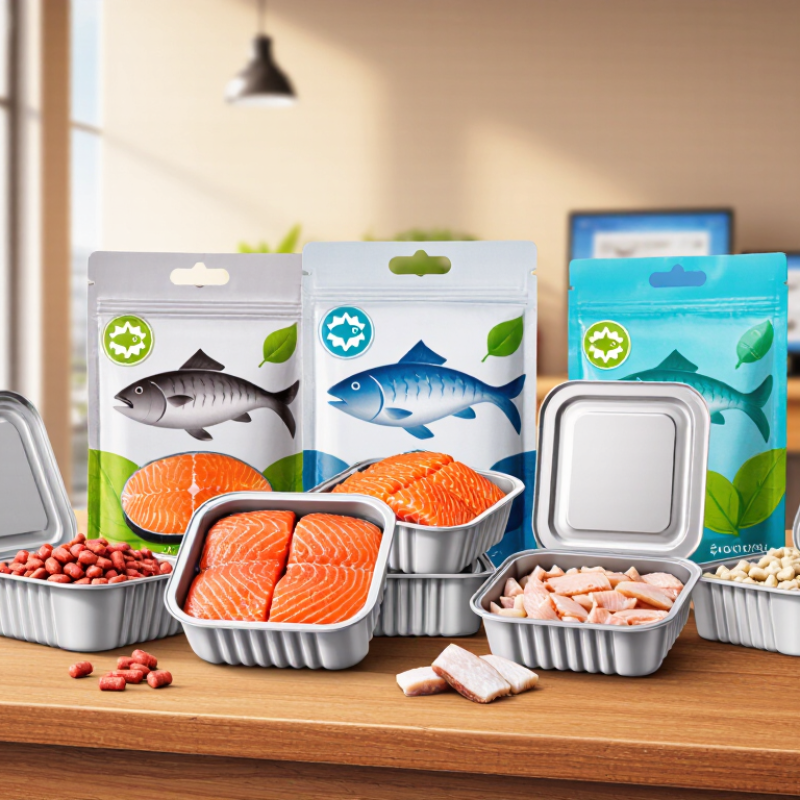
What ASC Certification Means for Fish-Based Pet Food Suppliers
What ASC Certification Means for Fish-Based Pet Food Suppliers
ASC certification signals that farmed fish comes from a responsibly managed aquaculture operation. It covers environmental performance, worker welfare, animal health, and traceability. The certification does not automatically approve a complete pet food recipe. That distinction matters.
The FAO’s State of World Fisheries and Aquaculture 2024 reported 185.4 million tonnes of aquatic animals produced in 2022. Aquaculture supplied 94.4 million tonnes, exceeding capture fisheries for the first time.
This growth increases demand for verifiable seafood ingredients. Suppliers should provide the farm certificate, species details, processing location, lot code, and Chain of Custody records. Small paperwork gaps can weaken a strong sustainability claim.
ASC’s annual reporting has documented more than 2,000 certified farms across many producing regions. Its Chain of Custody system helps trace certified fish through processors and distributors. FEDIAF’s 2024 facts and figures report placed European pet food sales near €29 billion in 2023. Buyers are clearly asking harder questions.
Yet certification alone does not prove balanced nutrition, freshness, or superior digestibility. Suppliers still need laboratory testing, contaminant controls, and accurate labeling. A practical audit might follow one fish meal lot from a coastal farm to a sealed pouch. That sounds simple. It rarely is. Misread certificates and mixed inventories remain risks, especially when several species share one processing line.
FAQS
It confirms responsible aquaculture or verified custody processes. It may not cover the finished pet food.
Request the current certificate, certificate number, species, facility, scope, and expiry date. Check official records.
It connects farmed fish ingredients with processors and sellers. Without it, a sustainability claim remains weak.
Look for harvest origins, batch codes, factory codes, feed origins, and delivery records. Details matter.
Check mercury, pathogens, oxidation, nutrient levels, and shelf-life stability. Testing should be recent and traceable.
No. Certification focuses on sourcing and custody, not complete nutritional performance. Formula quality still needs review.
Review temperature controls, refrigerated handling, sealing quality, storage records, and damage procedures. Small failures matter.
Use the same checklist for three suppliers. Compare protein, oil stability, ingredient clarity, testing, minimum orders, and traceability.
Vague answers, missing facility details, expired certificates, or incomplete batch records deserve questions. Polished websites can hide gaps.
No. Certificate status can change, and product quality may vary between batches. The method is useful, but imperfect.
Conclusion
This guide explores what ASC certification means for fish-based pet food suppliers and why it matters in 2026. ASC Certified Fish Pet Food is made with responsibly sourced seafood that follows defined standards for environmental protection, farm management, labor practices, and supply-chain transparency. The article explains how the top ten suppliers were selected by examining certification status, product quality, ingredient consistency, traceability systems, sustainability performance, manufacturing controls, and reliability for different purchasing needs.
It also compares the featured suppliers according to sourcing transparency, nutritional suitability, quality assurance, packaging options, and capacity to support long-term partnerships. Rather than focusing only on price, the guide shows buyers how to evaluate certification validity, species and ingredient documentation, batch traceability, testing procedures, production flexibility, and communication standards. These practical criteria can help retailers, distributors, and pet food manufacturers choose an ASC Certified Fish Pet Food supplier that aligns with their quality expectations, sustainability goals, regulatory responsibilities, and future growth plans.